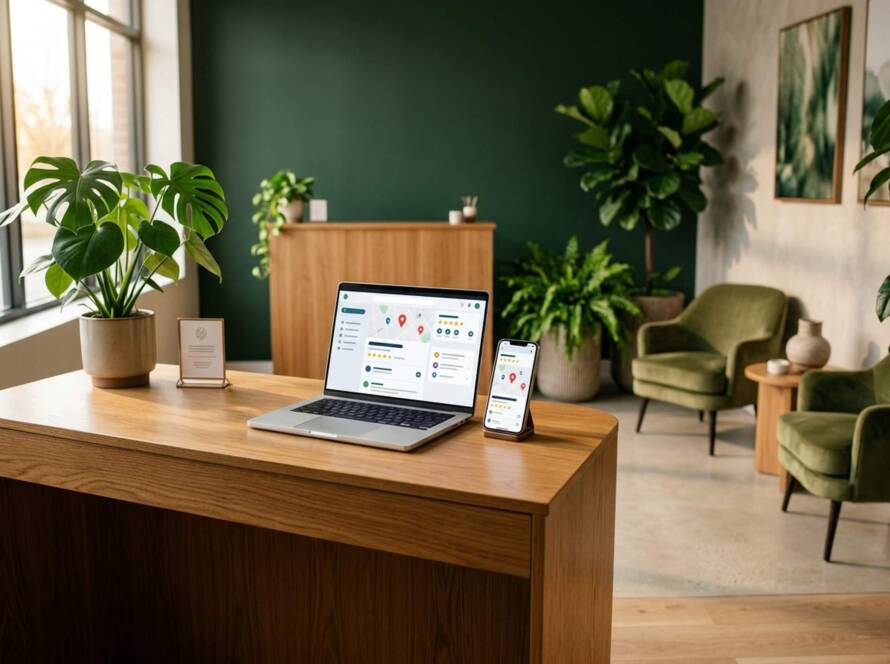
Nowadays, the therapy client journey starts on a smartphone. Someone struggling with anxiety, relationship breakdown, or burnout opens Google on their phone and searches for help. If your website loads slowly, looks cluttered, or makes it hard to find a contact button, they move on to the next result in seconds. Mobile web design for therapists is about making sure that moment goes differently. Mobile optimization is non-negotiable. With most therapy searches happening on mobile devices, your website must deliver flawless experiences on smartphones and tablets. This guide walks through every element of mobile web design for therapists that directly affects whether a visitor becomes a booked client, from load speed and layout to trust signals and call-to-action placement.
What Is Mobile Web Design for Therapists?
Mobile web design for therapists focuses on creating a smooth and stress-free website experience for smartphones and tablets. It ensures that every element, such as text, buttons, navigation, and load times, works smoothly on smaller screens.
A mobile-optimized therapy website is not simply a desktop site that shrinks to fit a smaller screen. It is designed with the mobile experience as the priority, ensuring text is readable without zooming, buttons are large enough to tap accurately, navigation is simple, and the most important information appears immediately without scrolling.
Mobile web design for therapists includes:
- Fast loading speed
- Easy navigation with minimal scrolling confusion
- Clear calls to action
- Readable text without zooming
- Simple contact options
Unlike desktop design, mobile design is about reducing effort. The fewer steps a user takes to find what they need, the higher your conversion rate.
Why Mobile Optimization Matters in 2026
More Than Half of All Therapy Searches Happen on Mobile
Over 60 percent of healthcare searches happen on mobile devices. For therapy specifically, mobile web design for therapists is essential because people often search for mental health support privately, on their phones, away from shared computers.
Google Ranks Mobile-First
Google uses the mobile version of your website to determine search rankings. A site that performs poorly on mobile will rank lower than a competitor whose mobile experience is smooth and fast, regardless of how good the desktop version looks.
First Impressions Happen in Seconds
You have approximately three seconds to capture a visitor’s attention before they navigate to a competitor.
For a therapist, that first impression carries additional weight. The person landing on your site may be reaching out for the first time about something deeply personal. A website that feels disorganized or difficult to navigate signals the opposite of the safety and professionalism they are looking for.
Booking Happens on Mobile
Over 70 percent of patients now prefer online scheduling rather than calling by phone, and nearly 60 percent of appointments are booked outside office hours. If your booking button is hard to find on a small screen, you are losing those enquiries to practices that made scheduling effortless.
Core Elements of a Mobile-Optimized Therapy Website
These are the core elements of mobile web design for therapists that ensure a smooth user experience.
Fast Load Speed
Every second of load time costs conversions. A page that takes more than three seconds to load on mobile loses a significant portion of visitors before they have seen anything. Compress images, invest in a fast hosting service, and avoid heavy scripts that cause the pages to lag.
Fluid Responsive Design
A Mobile-responsive template makes sure that your website is accessible on different devices without requiring separate maintenance. Text, images, and buttons should automatically adjust to fit any screen dimensions without horizontal scrolling or overlapping elements.
Readable Typography
Font size on mobile should be a minimum of 16 pixels for body text. Anything smaller forces visitors to pinch and zoom, which can cause a poor user experience. Line spacing should be good enough to make text easy to read in short bursts.
Thumb-Friendly Navigation
Buttons and links should be properly sized to allow tapping accurately with a thumb. There should be enough spacing between each button to prevent accidental clicks on the wrong link.
Clean Visual Hierarchy
Place the most critical information on the main page of your website, such as who your target clients are, your contact details, and what’s unique about your practice. Secondary information follows further down the page.
Mobile Design and SEO
Strong mobile web design for therapists directly improves Core Web Vitals and search performance.
Google’s Core Web Vitals: Great therapy website design removes every possible barrier to booking and is built to convert visitors into booked sessions through strategic, client-focused design and strong technical performance. Google measures your website’s mobile performance through Core Web Vitals, a set of metrics covering load speed, visual stability, and interactivity. Poor scores in these areas directly affect your search rankings.
Local SEO and Mobile: Most mobile therapy searches include a location: “therapist near me,” “anxiety counseling in [city].” Your mobile site needs to load fast enough and be structured clearly enough that Google can confidently rank it for these searches. A slow or disorganized mobile site signals to Google that the user experience will be poor, which pushes your ranking down.
Page Titles and Meta Descriptions on Mobile: Mobile search results display shorter titles and descriptions than desktop. Keep your page titles under 60 characters and meta descriptions under 160 characters so they display fully in mobile search results and communicate clearly to someone scrolling quickly through options.
Understanding how to create a professional therapy website with effective strategies ensures your mobile design and SEO work together from day one rather than being patched together after launch.
Booking and Contact on Mobile
In mobile web design for therapists, the booking and contact experience is one of the most important conversion factors.
Make the CTA Impossible to Miss
Your CTA button should be visible to visitors before they scroll at all. “Book a Free Consultation” or “Request an Appointment” should be a clearly visible button, not a text link buried in a paragraph.
Click-to-Call Functionality
Clickable phone numbers on mobile are very important. A phone number that requires copying and manual dialing loses clients. A tap-to-call button makes it easier for your potential clients to contact you.
Short Contact Forms
Short contact forms that ask only essential information reduce friction. Multiple ways to reach out, including online booking, phone, email, and contact form, give visitors options that match their comfort level.
On mobile, long forms feel particularly overwhelming. Ask for name, email, and a brief description of what they are looking for. Nothing more is needed at the initial enquiry stage.
Online Booking Integration
A booking tool that works flawlessly on mobile is one of the highest-value investments a private practice can make. When a potential client is booking an appointment, that process should take under two minutes on the phone without any confusion.
A strong mobile website with the right ad growth strategy makes sure that paid traffic that is directed to your website converts, rather than driving clicks to a mobile experience that loses them immediately.
Trust Signals That Work on Small Screens
Trust is a major part of mobile web design for therapists, especially on small screens where decisions are made quickly.
Professional Photography
Stock photos can come across as inauthentic and untrustworthy. By investing in professional photos of your actual office and yourself, you convey authenticity. Prospective clients are interested in the space where they will be sharing intimate details. On a mobile device, a single, high-quality photo of you or your office is more impactful than text.
Credentials Placed Visibly
Your credentials, registration body, and years of experience should appear at the top of your mobile homepage or about page, not at the bottom. Credentials instill trust quickly in someone considering contacting you.
Testimonials and Social Proof
Having client testimonials with permission, credentials, professional affiliations, and your therapeutic approach placed strategically on your site exponentially boosts conversion rates and eases any fear your visitor may have when reaching out. On mobile, one or two brief testimonials next to your call-to-action button carry significant weight.
Clear Specialisation
Generic messages about anxiety and depression treatment fail to resonate. Specifying your niche, targeting the right audience, and offering a distinct approach to therapy will help the right client find you and feel understood immediately. On mobile, your prospects determine in a few seconds if you’re the right match for them. Clear, specific messaging does that work faster than anything else.
How Mobile Web Design Supports Client Growth
Better web design for mobile devices does more than improve appearance. It directly impacts business results.
- Increased Enquiries: Clear pathways to contact lead to more calls and form submissions.
- Lower Cost Per Lead: When your website converts better, you spend less to acquire each client.
- Stronger First Impression: Your website often creates the first interaction with a potential client. A smooth experience builds trust before any conversation happens.
Mobile vs Desktop: Key Differences
Understanding these key differences helps in effective mobile web design for therapists.
Element | Desktop | Mobile Priority |
Navigation | Full menu bar visible | Simplified hamburger menu |
Images | High resolution, multiple per section | Compressed, one focal image per section |
Text | Longer paragraphs acceptable | Two to three sentences maximum per paragraph |
CTA Button | Visible but can be mid-page | Above the fold, large tap target |
Forms | Multiple fields acceptable | Three fields maximum for initial enquiry |
Load Speed | Under 3 seconds ideal | Under 2 seconds critical |
Phone Number | Text link sufficient | Tap-to-call button required |
Font Size | 14 to 16px acceptable | 16px minimum |
Common Mobile Design Mistakes Therapists Make
These are the common mistakes that must be avoided in mobile web design for therapists.
Using Desktop Images Without Compression
Large, uncompressed images that look fine on desktops destroy mobile load times. Every image on your website should be compressed and appropriately sized for mobile before going live.
Too Much Text Per Screen
Long paragraphs that work on desktop become walls of text on mobile. Break content into short paragraphs of two to three sentences. Use subheadings frequently so visitors can scan and find what they need quickly.
No Dedicated Mobile Layout
Many website builders offer an auto-optimized mobile version that often ends up clunky. Designing a separate mobile version of your website, rather than relying on automatic optimization, can make or break your ability to convert potential clients who browse on their phones.
Overcomplicated Navigation
Your website is a gateway to information or services for your therapy practice, and if users can’t easily navigate it, they’ll quickly become disoriented and leave the website.
An easy navigation system can greatly improve the user experience. It reduces frustration, encourages them to explore other pages of your website, and increases the likelihood of visitors staying and booking an appointment. On the other hand, complex navigation can lead to high bounce rates, low enquiries, and a tarnished reputation.
Buried Contact Information
Contact details that require scrolling to the footer on mobile will be missed by most visitors. Your phone number, email, and booking link should appear in multiple locations throughout the mobile page.
Slow Hosting
Hosting quality directly impacts mobile load speed and performance. Cheap shared hosting that works well enough on desktops can sometimes underperform on mobile connections. Investing in quality hosting is one of the most direct ways to improve mobile performance.
Ignoring the Mobile Booking Experience
Many therapists test their website on desktop and assume mobile works the same way. Test every form, button, and booking flow specifically on multiple mobile devices and operating systems before considering the site ready for traffic.
Maintaining a high standard across every touchpoint connects directly to marketing quality in therapy practices, where the website is just one part of a consistent and professional client experience from first search to first session.
Conclusion
Mobile web design for therapists is where client acquisition begins. Every second of load time, a buried contact button, confusing navigation, and unreadable paragraphs on a small screen are potential clients who did not reach out. For consistent client acquisition, mobile web design optimization is a direct investment in the growth of your practice.
Whether you are building from scratch or refining an existing site, Psychotherapy Growth is here to help every private practice create a mobile presence that works as hard as you do. Reach out today and let us help you turn your website into your most reliable source of new clients.
FAQs
The goal is to provide a smooth and stress-free experience for potential clients who are searching for mental health support on their phones, ensuring they can find your information and contact you instantly.
Over 60 percent of therapy-related searches happen on mobile devices. A website that performs poorly on mobile loses potential clients before they ever read your content or find your contact details.
Signs such as high bounce rates, low enquiry rates, and slow load times indicate that your website is losing potential clients. You can check this by using free tools like Google PageSpeed Insights. If your mobile performance score is low, it’s a clear sign that you need better mobile web design to improve your practice growth.
Ideally, the site should load within two seconds. Every additional second of load time increases the percentage of visitors who leave before the page finishes loading. Fast hosting and compressed images are the two most direct improvements.
A visible, easy-to-tap call-to-action button that appears before scrolling. If a visitor cannot immediately see how to reach you, it is most likely that they will not look for it.